
The Power of Cities: Harnessing Low-Carbon Urbanization for Climate Action
This report from the World Bank highlights the need to integrate low-carbon urbanization into countries’ national climate change strategies and outlines the opportunities to bridge between national decarbonization and urban development goals.
As countries strive to embed climate action into their development planning, incorporating low-carbon urban growth agenda into Nationally Determined Contributions (NDCs) and Long-Term Low-GHG Emission Development Strategies (LTSs) can signal political commitment, foster coordination with local stakeholders, facilitate access to finance, and enable effective implementation. This report from the World Bank attempts to identify integrative solutions to overcoming barriers to integration related to countries’ policy frameworks and institutional structures; finance mobilization efforts; evidence-based policy processes; and tracking systems and proposes a Readiness Diagnostic Framework to help identify efforts needed at both national and city levels to pursue such integration. Additionally, it offers a Guide for Selecting Urban Diagnostic Tools and Models to enhance evidence-based urban climate policy processes in rapidly urbanizing countries.

UrbanShift Looks Back: On the Importance of Facilitating Multi-Level Collaboration
Over the course of the UrbanShift program, ICLEI has led on National-Local Dialogues and other efforts to support enhanced collaboration across levels of government to create more aligned, actionable climate strategies.

UrbanShift at COP30
UrbanShift will be participating in a range of events during the Local Leaders Forum in Rio and COP30 in Belém. Learn more here.
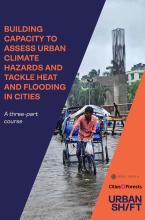
Building Capacity to Assess Urban Climate Hazards and Tackle Heat and Flooding in Cities
These three interconnected courses are designed to build the capacity of city officials and urban practitioners to conduct vulnerability assessments.

INTEGRATED SUSTAINABLE URBAN DEVELOPMENT ASSESSMENT (ISUDA)
This report benchmarks progress and identifyes pathways for integrated urban development, particularly highlighting key trends, cross-cutting challenges and strategic recommendations.
