Report

Publication: Planning for Transit-Oriented Development in Emerging Cities
The book emphasizes the importance of integrating land use regulations with transport planning. By aligning these two elements, cities can promote higher densities, mixed land uses, and pedestrian friendly environments.
The book develops a sandbox model to simulate the impacts of land use regulations on transit ridership. Public transport, to a much larger extent than private modes, depends on the surrounding built environment. Not only is density necessary to provide the scale that enables mass transit but accessing transit is a last-mile problem—typically solved by walking. Both these components, density and walkability, can be heavily influenced by land use regulations. To test the impact of different land use regulations on transit ridership, the authors built a sandbox simulation model. The model represents a stylized city block centered around a bus stop or mass transit station entrance. It shows the number of people who are willing to walk to access the transit system and how this number changes depending on the land use regulations in place in the city block.
The model shows that public transport ridership increases with increasing plot coverage ratio and FAR and decreases with more setbacks and parking requirements. Increasing the FAR is critical, validating the emphasis the TOD literature places on this regulation. The model also showed an inverse relationship with the setback requirement. Large setback requirements generate a car-oriented pattern because they lower density and increase the distance people must walk to access the sidewalk and then walk to the transit stop. The model shows how on-the-street parking requirements occupy land that could be used for housing. Reducing these requirements will increase the housing supply. Off-the-street parking requirements reduce space for people due to the need to allocate space for cars. The nascent trend to reduce and even eliminate parking requirements is reasonable and will improve housing affordability. However, reducing and eliminating parking requirements should happen in the context of a sound parking policy that includes better pricing and incentivizes the private sector to invest in formal parking.

What's Next for the UrbanShift Network?
As the UrbanShift Global Platform concludes, the next phase of the GEF Sustainable Cities Impact Program will build on the momentum and progress for sustainable and resilient cities.

UrbanShift Looks Back: On Changing the Conversation around the Role of Cities in Climate Action
Over the past five years, UrbanShift's advocacy efforts have helped to shape the conversation around the value of cities for driving transformative progress. UNEP's Gulnara Roll, Sharon Gil and Elsa Lefèvre share their reflections.

UrbanShift Annual Report Launch Webinar: Reflecting on 5 Years of Impact
This webinar will highlight voices from around the UrbanShift network and spotlight stories of sustainable urban transformation.
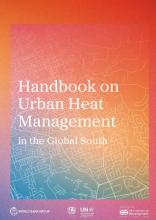
Handbook on Urban Heat Management in the Global South
The Handbook helps cities take action by offering practical guidance to assess heat risk, plan resilience strategies, and implement solutions such as green infrastructure, passive cooling, and sustainable cooling systems.
